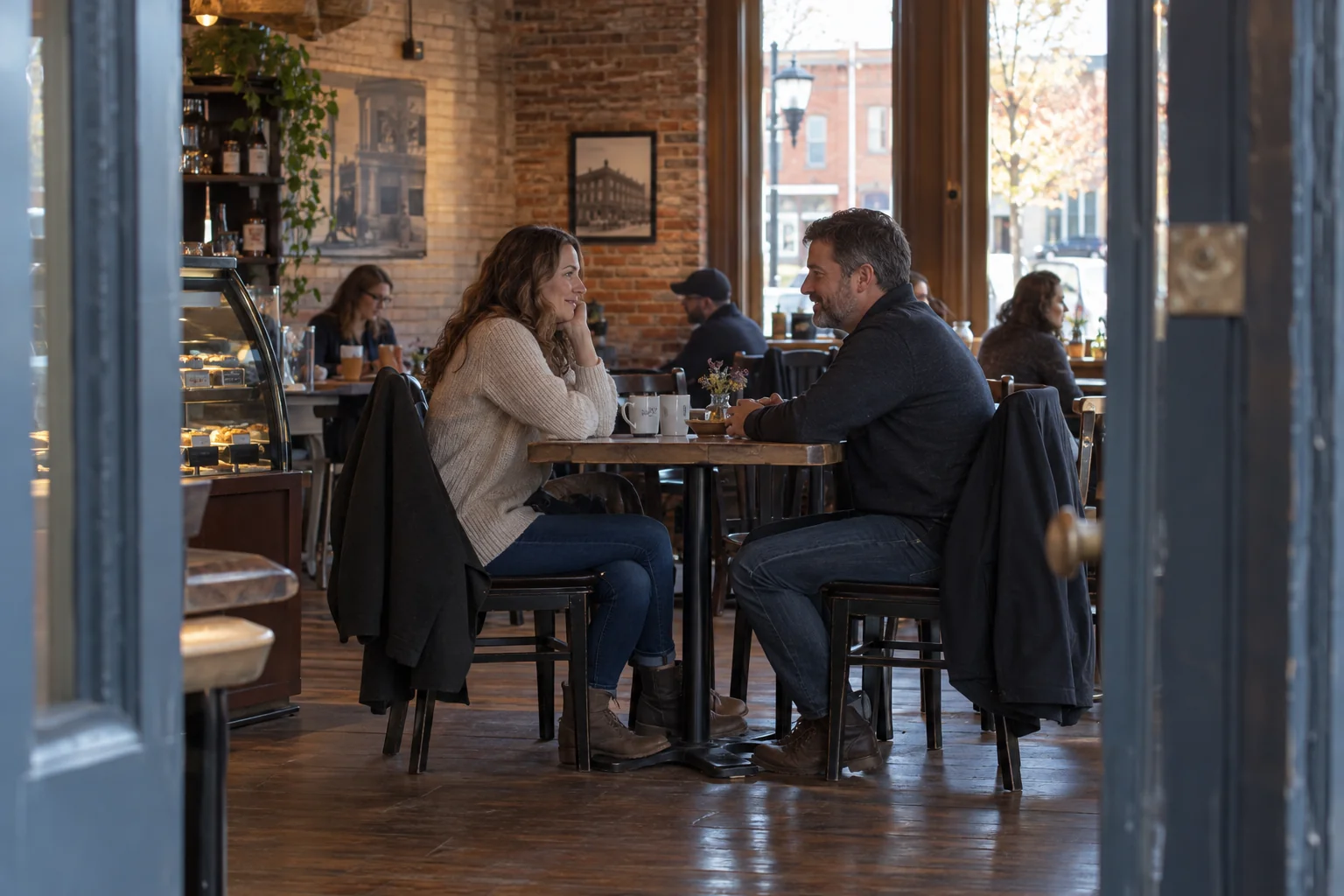
Make your dating privacy choices specific
In a smaller Pennsylvania community, dating can come with overlapping circles. Your favorite café may also be where a coworker spends Saturday mornings. That does not mean you have to choose between dating and keeping parts of your life private.
Think about what you want to protect. Your exact address, a health conversation, your children’s routines, and your public profile may need different boundaries. A clear goal helps you make useful decisions without treating every interaction as a threat.
No online profile or public meeting can guarantee anonymity. Aim for thoughtful control over what you share, rather than a promise that nobody will recognize you.
Make a privacy plan for three different audiences
Privacy in small-town herpes dating becomes easier to discuss when you separate audiences. There are people who can see a profile, a person you are messaging, and familiar people in your offline life. You may want different boundaries with each group.
Public profile
Choose a broad location and interests without listing the details of your routine. Check the service’s current visibility settings instead of assuming that a profile is available only to people you contact.
One-to-one conversation
Share information according to trust and context. A private message can still be saved. Decide what you would be comfortable putting in writing and what you would rather discuss in a considered conversation.
Friends and acquaintances
You can keep the fact that you are dating separate from a health disclosure. Telling a trusted friend where you will meet someone does not require sharing the other person’s diagnosis or private messages.
The goal is not to maintain three versions of yourself. It is to avoid giving more information than a particular interaction needs. That makes privacy a practical boundary instead of a vague wish that nothing will ever be noticed.
Check what a profile gives away
Read the partner service’s current visibility information. Look at photos as if you were a stranger: is a street sign visible, is a work badge readable, or does a caption describe a routine at an exact time?
Use a broader location description where the service allows it. Avoid placing a home address or precise workplace schedule into a bio. Do not share another person’s private details while explaining your own situation.
Remember that private messages can be saved or forwarded. Share sensitive information deliberately and only when you feel ready to have that conversation.
Do a background-detail check before publishing photos
A picture can reveal a location or routine without including a caption. Look beyond your face. Consider whether the background contains a home number, a workplace badge, a vehicle detail, or a familiar private setting.
Look for combinations, not only single clues
One broad detail may seem unimportant, but several details together can make you easier to identify. A workplace reference, a precise neighborhood, and a regular activity at a named time may reveal more as a group than you intended.
You do not need to remove every trace of personality from a profile. Choose details that create conversation without exposing a routine. A preference for gardening is different from explaining exactly when your house is empty.
Ask permission before using images that include other people. Your wish to show an active social life does not outweigh someone else’s preference to stay out of a dating profile. If a photo’s context is too complicated to share comfortably, choose another picture.
Choose a nearby public place on purpose
A venue in another town may feel more comfortable than your usual neighborhood spot. Check whether the journey is manageable for both people, and keep the location public with staff or other visitors around.
Privacy does not require meeting at someone’s home or on an isolated trail. An unfamiliar but busy café can offer some distance from your everyday circles while keeping practical safety measures in place.
Tell a trusted person where you will be. You can ask them to keep that information private while still giving yourself support.
Arrange a discreet date without making it isolated
Consider a public place in a neighboring town that neither person uses regularly. The location can provide a little distance from familiar circles without removing staff, other visitors, or independent transport.
Compare two kinds of comfort
Social comfort means feeling less likely to run into someone you know. Practical comfort means being able to arrive, meet, and leave without difficulty. A venue that improves the first while undermining the second is not necessarily a good choice.
For example, imagine a person near York and a date closer to Lancaster. Rather than choosing an unfamiliar isolated stop simply because it is halfway, they could compare public cafés and actual journey times. The best option may not divide the drive equally, so they should talk about that openly.
Check current opening hours directly. If the chosen venue is closed, do not automatically change to a private home. Agree on another public location or reschedule. A backup is especially useful when both people have made a longer trip.
Talk about discretion without secrecy games
“I prefer to keep my dating life fairly private while I’m getting to know someone. Please check with me before posting photos or tagging me.”
This is a clear request about behavior. It does not require inventing a story or asking the other person to hide indefinitely. Discuss what privacy means to each of you, because expectations can differ.
Be cautious if “privacy” becomes a reason someone refuses every public meeting, demands isolation, or pressures you to conceal harmful behavior. Your boundary should help you feel more comfortable, not remove your options.
Prepare a low-detail answer for a familiar face
You may still run into someone you know. Planning a simple introduction can make that possibility less distracting. You do not need an elaborate cover story or an explanation of the relationship.
Keep the introduction ordinary
“Hi, good to see you. This is someone I’m getting to know. We were just catching up over coffee.”
Use whatever wording is accurate and comfortable. If you would rather not define the connection, introduce the person by name and move on. You do not owe an acquaintance your dating history or health information.
Discuss preferences with your date beforehand if this is a concern. They may be comfortable with a quick greeting, or prefer not to be introduced beyond a first name. Agree on a respectful approach rather than expecting them to improvise your privacy rules.
If someone later asks intrusive questions, you can say you are keeping your personal life private. A short answer is easier to maintain than an invented story with details that need defending.
Make photo and tagging boundaries explicit
A person may think a shared picture is a harmless way to express enthusiasm while you see it as a public announcement. Discuss that difference before posting becomes an issue.
Ask for consent at the moment
“Are you comfortable if I post this?” is more useful than assuming that agreeing to a photograph means agreeing to publication. Ask separately about names, tags, and location information. Consent to one use does not automatically cover every use.
You can make a general preference clear early: you do not post dates while you are getting to know someone. That gives the other person a predictable boundary rather than a surprising rejection after they have taken a picture.
The same standard applies to messages. Do not share screenshots of a date’s personal disclosures with friends as entertainment. If you need advice, describe your feelings and the relevant behavior without circulating more private information than necessary.
Make distance sustainable
Expanding a dating radius can create more possibilities, but it also adds travel, expense, and planning. Discuss what regular contact could realistically look like before assuming a promising conversation can become an easy routine.
A midpoint should be useful to both people. Consider road conditions, time of day, access, and independent transport home. Do not make one person responsible for every journey without discussing it.
For a regional starting point, read our Central Pennsylvania dating guide.
When someone shares more than you agreed
If a boundary is crossed, start with the specific action and the change you want. You might ask someone to remove a photograph, take off a tag, or stop discussing personal information with mutual acquaintances.
Do not promise yourself complete control
You may be able to request removal, but you cannot know whether information has already been copied. Keep that limitation in mind when deciding what to share in the first place. It is a reason for deliberate choices, not a reason to blame yourself if another person acts badly.
For online accounts, the FTC’s phishing guidance is useful if someone sends unexpected links or requests for login details. Use the service’s own reporting and privacy options for issues involving its pages.
Consider whether the person understands the boundary and changes their behavior. A misunderstanding followed by a respectful correction is different from repeatedly dismissing your concerns. You can limit further contact even if you cannot undo every disclosure.
Keep your own definition of comfortable
You may become more open as a relationship develops, or keep some parts of life private for a long time. Either way, revisit the conversation rather than assuming the first agreement will answer every future situation.
If someone shares information against your wishes, you can reconsider the relationship and use relevant reporting tools. This website cannot control what another person does, but you can decide how much access they continue to have to you.
Our dating safety page covers broader precautions. For personal health conversations, visit the herpes conversation guide.
Let privacy evolve through agreement, not assumption
As a relationship develops, some information may naturally become more public. You might meet friends, attend a local event together, or share a photograph. Revisit the conversation rather than assuming that time alone has changed every boundary.
Ask what each person is comfortable sharing now and with whom. Someone may be happy to be known as your partner while still wanting health information kept private. Those are separate decisions.
You can also choose a more private relationship without treating it as temporary or embarrassing. What matters is that the arrangement is mutual and does not conceal pressure, isolation, or behavior that concerns you.
A thoughtful privacy plan should leave room for an actual relationship. It protects the ability to choose how you become known, rather than making every ordinary moment feel like something to hide.
Separate a safety check-in from a personal disclosure
You can tell a trusted person where a first date will take place without giving them the other person’s health history. A safety check-in needs the location, approximate time, and a plan for hearing from you afterward. It does not require screenshots of intimate conversations.
Explain what you would like kept private. If you are dating in a nearby town to create some distance from familiar circles, tell your friend that you appreciate their support and do not want the plan discussed casually with others.
Agree on what they should do if you do not check in as planned. Keep the arrangement realistic for both of you rather than assuming they will watch their phone all evening. Your phone, transport, and ability to leave remain your own practical responsibilities.
Afterward, you can discuss how the date felt without turning the other person into a story for the group. Describe the behavior relevant to your decision and avoid sharing personal information simply because it makes the account more interesting.
This distinction helps privacy and support coexist. You do not have to date without anyone knowing where you are, and you do not have to make a new person’s private circumstances public to obtain advice.
The same consideration should apply if the relationship develops. Being part of your life does not remove someone’s ability to decide what they want shared about theirs.
General editorial guidance. For individual health questions, consult a qualified healthcare professional.